Tuesday, August 26, 2008

Rich Countries Once Used Gunboats to Seize Food. Now They Use Trade Deals

The world's hungriest are the losers as an old colonialism returns to govern relations between wealthy and poor nations

by George Monbiot

In his book Late Victorian Holocausts, Mike Davis tells the story of the famines that sucked the guts out of India in the 1870s. The hunger began when a drought, caused by El NiƱo, killed the crops on the Deccan plateau. As starvation bit, the viceroy, Lord Lytton, oversaw the export to England of a record 6.4m hundredweight of wheat. While Lytton lived in imperial splendour and commissioned, among other extravagances, "the most colossal and expensive meal in world history", between 12 million and 29 million people died. Only Stalin manufactured a comparable hunger.

Now a new Lord Lytton is seeking to engineer another brutal food grab. As Tony Blair's favoured courtier, Peter Mandelson often created the impression that he would do anything to please his master. Today he is the European trade commissioner. From his sumptuous offices in Brussels and Strasbourg, he hopes to impose a treaty that will permit Europe to snatch food from the mouths of some of the world's poorest people.

Seventy per cent of the protein eaten by the people of Senegal comes from fish. Traditionally cheaper than other animal products, it sustains a population that ranks close to the bottom of the human development index. One in six of the working population is employed in the fishing industry; about two-thirds of these workers are women. Over the past three decades, their means of subsistence has started to collapse as other nations have plundered Senegal's stocks.

The EU has two big fish problems. One is that, partly as a result of its failure to manage them properly, its own fisheries can no longer meet European demand. The other is that its governments won't confront their fishing lobbies and decommission all the surplus boats. The EU has tried to solve both problems by sending its fishermen to west Africa. Since 1979 it has struck agreements with the government of Senegal, granting our fleets access to its waters. As a result, Senegal's marine ecosystem has started to go the same way as ours. Between 1994 and 2005, the weight of fish taken from the country's waters fell from 95,000 tonnes to 45,000 tonnes. Muscled out by European trawlers, the indigenous fishery is crumpling: the number of boats run by local people has fallen by 48% since 1997.

More...

Thursday, August 21, 2008

Importing Food Means Exporting Drought

Happy world water week folks...

Published on Wednesday, August 20, 2008 by The Guardian/UK

We need to change the way we eat if we are to tackle the looming catastrophe of water scarcity
by Tom MacMillan


If you want proof the world has a water problem you're better treading the damp summer pavements of the City than the parched bed of the Aral Sea.

Goldman Sachs says water is the next oil and has bullish investment trends to prove it. For the rest of us a water boom spells trouble: investors can smell scarcity a mile off and, however much money they pump into managing it, the last result they'll want is abundance.

It will be our plates, not our rates, that bear the brunt of water shortage. As today's report from WWF spells out, the amount we spew out of taps is piddling compared with what it takes to make stuff and, especially, to grow our food.

continue

Sunday, August 17, 2008

Can the UN clean up the trade in carbon offsets?

posted by Dustin
The credibility of the whole system of carbon trading that is promoted in every entry level environmental, economics, and policy studies course is at stake. The question is, does anything voluntary ever work? Or another question is, would these CDM proposals simply emerge as development/aid programs otherwise? It sounds like the UN is finally treating this whole carbon offsetting and trading debacle with a little more scrutiny. Some groups like carbon trade watch have been looking with skepticism for some time. See the carbon neutral myth...

Can the UN clean up the trade in carbon offsets?
Posted by James Kanter


These days you can readily buy carbon credits from websites to“offset” your greenhouse gas emissions at home or from a flight. This trade has grown quickly but it has attracted sharp criticism because the companies offering the credits are largely unregulated and sometimes poorly monitored.

continued at international herald tribune...

Friday, August 15, 2008

Two Large Solar Plants Planned in California


August 15, 2008
By MATTHEW L. WALD, NYT

Companies will build two solar power plants in California that together will put out more than 12 times as much electricity as the largest such plant today, the latest indication that solar energy is starting to achieve significant scale.

continued at the NYT...

Tuesday, August 12, 2008

Colbert on Obama energy policy

ilovemountains.org

I'm not sure how reputable this site is, but its an interesting teaching/educational widget.

    
Pin this badge on your site.

Saturday, August 9, 2008

The oil war treadmill?

posted by Dustin


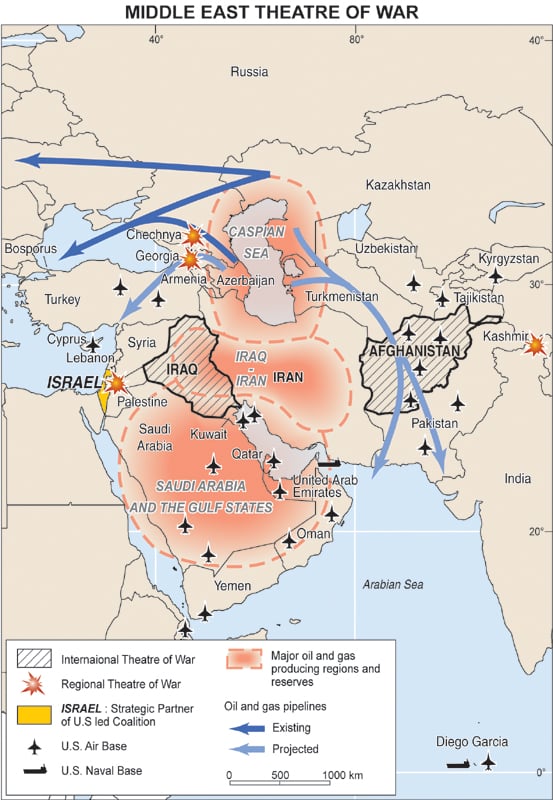
Russian jets today targeted the 3 year-old Baku-Tbilisi-Ceyhan pipeline that takes oil form the Caspian to the Mediterranean. Reports are that they missed.

This "energy corridor" is a critical piece for securing future profits for multinational oil companies, since this oil is eventually directed toward the very rapidly evolving markets in China and India. There have already been announcements to link it the
Trans-Israel Eilat-Ashkelon pipeline, connecting Ceyhan to Israeli ports, bypassing Syria and Lebanon.

It is going to very important to keep an eye on what is happening and wade deep through the media noise over the coming weeks.

Darfur Withers as Sudan Sells a Food Bonanza


posted by Dustin

An excellent article that to me implies that petrodollar recycling is having an impact on the development of agriculture, and consequently famine, in Sudan. Wheat to Saudi Arabia? Vine ripened tomatoes for the Jordanian Army? Time to rethink the food aid/export earnings paradigm.

from nyt...
August 10, 2008
The Food Chain

ED DAMER, Sudan — Even as it receives a billion pounds of free food from international donors, Sudan is growing and selling vast quantities of its own crops to other countries, capitalizing on high global food prices at a time when millions of people in its war-riddled region of Darfur barely have enough to eat.

read more...

Wednesday, August 6, 2008

Supermarket Chains Narrow Their Sights

Important questions about scale...

By MARIAN BURROS, NYT

ONE of the biggest brand names in food this summer doesn’t carry a trademark. It’s the word “local,” which has entered the language as a powerful symbol of high quality and goodness.

Supermarkets are beginning to catch on that stocking corn and tomatoes grown nearby is not enough for customers. Now they are competing with farm stands and farmers’ markets for a wider variety of fresh fruits and vegetables.

It’s been a boon for local farmers. Ten years ago local produce was devalued at the wholesale Hunts Point market, said Lyle Wells, whose family has been farming on Long Island since 1660. “Now you can’t get enough of the stuff.”

Last month Wal-Mart announced that it plans to spend $400 million this year on locally grown produce, making it the largest player in that market.

full article in nyt...


Monday, August 4, 2008

Shipping Costs Start to Crimp Globalization

posted by Dustin

This trend could be promising for every issue from domestic job creation to supply chain auditing.

August 3, 2008
Shipping Costs Start to Crimp Globalization

By LARRY ROHTER NYT
When Tesla Motors, a pioneer in electric-powered cars, set out to make a luxury roadster for the American market, it had the global supply chain in mind. Tesla planned to manufacture 1,000-pound battery packs in Thailand, ship them to Britain for installation, then bring the mostly assembled cars back to the United States.

But when it began production this spring, the company decided to make the batteries and assemble the cars near its home base in California, cutting more than 5,000 miles from the shipping bill for each vehicle.

continued here...

Saturday, August 2, 2008

Wind fall profits tax & the energy consumer rebate = redistributive bandaid

I eagerly read a story about the windfall profit tax announced by Obama yesterday on the heals of Exxon Mobil's announcement on record profits. Skirting into the tax discourse is a potentially dangerous area for politicians, so I can perhaps justify his focus on the redistributive consumer rebate that will be funded by such a tax. But in the big picture this policy is very weak on substance, much to my disappointment.

If this political economic opportunity to pass a windfall profits tax is lost, and fails to correct some of the fundamental distortions in the carbon energy economy, it would be a terrible missed opportunity that may not reemerge anytime soon. It will have repercussions far beyond high energy costs, and postpone attempts to foster a low-carbon energy system.

Obama Remarks on the Economy are here on the nyt

Thursday, July 31, 2008

Rising Oil Prices Swell Profits at Exxon and Shell

August 1, 2008 By CLIFFORD KRAUSS and JULIA WERDIGIER

HOUSTON — Exxon Mobil, the world’s largest publicly traded oil company, reported on Thursday its best quarterly profit in history, but investors sold off shares in morning trading after expecting even higher earnings because of soaring oil and natural gas prices.

Record earnings for the world’s largest publicly traded oil company have become almost as predictable as the surge of gasoline prices at the pump in recent years, and for the second quarter income rose 14 percent, to $11.68 billion.

It was the highest quarterly profit ever for any American company, as Exxon made nearly $90,000 a minute.

Such profits have made Exxon Mobil a target of politicians in recent years, propelling calls for windfall profits taxes to finance research and development for renewable fuels to replace oil.

continue to NYT

Sunday, July 27, 2008

Nothing to Eat

By JOHN T. EDGE
Published: July 27, 2008
NYT book review

Paul Roberts’s prophetic and well-received 2004 book, “The End of Oil: On the Edge of a Perilous New World,” anticipated the current energy crisis. Now he’s moved on to what we put in our mouths. Roberts’s new book, “The End of Food,” which takes into account a vertiginous pile of recent developments — including the so-called tortilla riots of 2007, during which thousands took to the Mexico City streets to protest the rapidly rising cost of maize — may prove no less prescient.

[go to article]

contributed by TimV

Saturday, July 26, 2008

Greening colleges

Here's an interesting article on shifting preferences for college education towards sustainable institutions
http://www.nytimes.com/2008/07/27/education/edlife/27green.html?hp

posted by Alex

Gassing up with garbage

July 24, 2008
The Energy Challenge, NYTIMES

Gassing Up With Garbage
By MATTHEW L. WALD

After years of false starts, a new industry selling motor fuel made from waste is getting a big push in the United States, with the first commercial sales possible within months.

Many companies have announced plans to build plants that would take in material like wood chips, garbage or crop waste and turn out motor fuels. About 28 small plants are in advanced planning, under construction or, in a handful of cases, already up and running in test mode.

For decades scientists have known it was possible to convert waste to fuel, but in an era of cheap oil, it made little sense. With oil now trading around $125 a barrel and gasoline above $4 a gallon, the potential economics of a waste-to-fuel industry have shifted radically, setting off a frenzy to be first to market.

“I think American innovation is going to come up with the solution,” said Prabhakar Nair, research chief for UOP, a company working on the problem.

Success is far from assured, however. Some of the latest announcements come from small companies whose dreams may be bigger than their bank accounts. They are counting on billions in taxpayer subsidies. Big technological hurdles remain, and even if they can be solved, no one is sure what unintended consequences will emerge or what it will really cost to produce this type of fuel.

“We desperately need it, and I personally think it’s not there yet,” said Steven Chu, director of the Lawrence Berkeley National Laboratory and a Nobel Prize-winning physicist. “You have to look at starts with a grain of salt, especially starts where they say, ‘It’s around the corner, and by the way, can you pay half the bill?’ ”

Still, the incentive to make fuel from something, anything, besides oil and food is greater than ever. Moreover, the federal government is offering grants to help plants get off the ground and subsidies for one type of fuel of $1.01 a gallon, twice the subsidy it historically offered to ethanol made from corn.

Potential controls on global warming gases would heighten the appeal of these fuels, since many of them would add little new carbon dioxide to the atmosphere.

Tellingly, the type of companies placing bets on the field has started to expand. The earliest were small start-ups founded by people with more technological vision than business experience. Now some of the giants of global business, including Honeywell, Dupont, General Motors, Shell and BP, are taking stakes in the nascent industry.

The dream of making fuel from plants is almost as old as the internal combustion engine. Henry Ford himself was fascinated by the idea, and it re-emerges in periods of fuel scarcity and high prices. These days, advancing technology has made the notion more plausible.

Virtually any material containing hydrogen, carbon and oxygen could potentially be turned into motor fuel. That includes plastics, construction debris, forest and lawn trimmings, wood chips, wheat straw and many other types of agricultural waste.

The potential fuels include ethanol, which can be blended with gasoline, or other liquids that could displace gasoline or diesel entirely. Government studies suggest the country could potentially replace half its gasoline supply in this way — even more if cars became more efficient.

The government is pushing to get the industry off the ground. Legislation passed last year mandates the use of 36 billion gallons of biofuels a year by 2022, less than half of it from corn ethanol. Almost all the rest is supposed to come from nonfood sources, though the requirement could be waived if the industry faltered.

“One has to say upfront that what Congress has done is remarkable in its bravery,” said David Morris, vice president of the Institute for Local Self Reliance, a group in Minneapolis that advocates biofuels.

Much of the new money flowing into the field is coming from Silicon Valley, where the venture capitalists who gave the world the Internet revolution see an opportunity to do something similar with the fuel supply.

At Solazyme, a start-up in South San Francisco that hopes to commercialize a process for making fuel from algae, President Harrison F. Dillon said, “When we founded the company in 2003, we couldn’t find a venture capital firm that had heard of the concept of a biofuel.” Now he is backed by two such firms.

Venture capital investment in the first half of this year hit $612 million, up from $375 million in all of 2007, according to a survey by Thomson Reuters. Every few days brings another announcement. PFC Energy, a Washington consulting firm, counts projects worth perhaps $1.5 billion that will total more than 300 million gallons of capacity by 2011, if they all get built.

That is small in the scheme of American fuel demand, but it would presumably set the stage for substantial growth if those first projects prove that the economics can work.

One of the first companies to bring a plant online is KL Process Design Group, in Wyoming. With experience making corn ethanol plants, it has built a small plant meant to use pine wastes from a nearby national forest. The company is still testing its production line but hopes to begin commercial sales of ethanol late this year.

“We’re still learning and tweaking, and hoping for a little bit of capital infusion,” said Tom Slunecka, a vice president of the company.

Range Fuels, of Denver, is building a commercial-scale plant in Soperton, Ga., with help from the Energy Department. That plant will take pine chips and turn them into ethanol, with commercial sales expected by late 2009 or 2010.

Some companies want to use garbage. On Friday, a company called Fulcrum BioEnergy said it would start construction later this year on a $120 million plant at the Tahoe-Reno Industrial Center, in Storey County, Nev., to make 10.5 million gallons of ethanol a year from 90,000 tons of garbage. Operation would begin in early 2010.

In Montreal, another firm, Enerkem, plans to use arsenic-contaminated utility poles from the provincial electric company. On Wednesday, the Los Angeles County Regional Planning
Commission approved a plan by BlueFire Ethanol to build a $30 million garbage-to-ethanol plant on 10 acres next to a landfill in Lancaster, Calif.; construction will start soon, the company said.

A handful of small companies has long made a diesel replacement from waste oil, or sold kits to individuals to do the same. One company in Carthage, Mo., even turns turkey guts into fuel. The goal of the emerging waste-to-fuel industry is more elaborate, however: to take bulky, solid feedstocks and transform them into high-grade motor fuel.

History provides plenty of warning that it will not be easy. A company called Verenium in Lafayette, La., has cut ribbons three times in one locale since 1998 on plants that would supposedly make fuel from sugar cane waste, and has yet to sell a drop because of problems converting laboratory success into smooth, commercial-scale operation.

A bigger operation, Iogen, has been running a demonstration plant in Ottawa since 2004 that can turn wheat straw into ethanol. It was expected to build a plant in Idaho but has suspended work to focus attention on a plant in Saskatchewan. “It would be our view that there are substantial challenges in scaling up a big new biochemical process,” said Brian Foody, the president.

The Energy Department early last year picked six projects as most likely to succeed, and offered each of them tens of millions of dollars. Iogen’s Idaho project was among them; so was a plant in Kansas proposed by a Florida company, Alico, that has also been abandoned. Still, increasing interest from big companies — ones with a track record of solving technical problems — suggests that a waste-to-fuel industry may not remain out of reach forever.

General Motors has invested an undisclosed sum in two companies, Coskata, of Warrenville, Ill., and Macoma, of Lebanon, N.H., that aim to turn crop wastes into ethanol.

DuPont, one of the world’s largest chemical companies, has joined forces with a company called Genencor, announcing plans to commercialize a process for making ethanol from the nonedible parts of corn and sugar cane. They plan to invest $140 million over three years.

In making their announcement, the companies estimated the worldwide market for fuels made by methods like theirs would eventually reach $75 billion, dwarfing the scale of today’s biofuels produced from food crops like corn and sugar cane.

Friday, July 25, 2008

Suburbs, subprime, and oil

First off- thank you D for sharing this space with me, it'll be fun!

There is an excellent article in The Atlantic this month that connects the housing slump with the future of cities, energy, and suburbs. Take a look here. I think that this scenario is not necessarily inevitable, but we do know (can't recall where I read the story on this research right now) that when inner city poor are moved willy nilly into the suburbs, without adequate help, the crime and social problems seem to follow.

posted by Alex

Don’t Drink the Nuclear Kool-Aid


Don’t Drink the Nuclear Kool-Aid

by Amy Goodman

While the presidential candidates trade barbs and accuse each other of flip-flopping, they
agree with President Bush on their enthusiastic support for nuclear power.

Sen. John McCain has called for 100 new nuclear power plants. Sen. Barack Obama, in a July 2007 Democratic candidate debate, answered a pro-nuclear power audience member, “I actually think that we should explore nuclear power as part of the energy mix.” Among Obama’s top contributors are executives of Exelon Corp., a leading nuclear power operator in the nation. Just this week, Exelon released a new plan, called “Exelon 2020: A Low-Carbon Roadmap.” The nuclear power industry sees global warming as a golden opportunity to sell its insanely expensive and dangerous power plants.

But nuclear power is not a solution to climate change — rather, it causes problems. Amory Lovins is the co-founder and chief scientist of Rocky Mountain Institute in Colorado. He makes simple, powerful points against nuclear: “The nuclear revival that we often hear about is not actually happening. It is a very carefully fabricated illusion … there are no buyers. Wall Street is not putting a penny of private capital into the industry, despite 100-plus percent subsidies.” He adds:
“Basically, we can have as many nuclear plants as Congress can force the taxpayers to pay for. But you won’t get any in a market economy.”

Even if nuclear power were economically viable, Lovins continues, “the first issue to come up for me would be the spread of nuclear weapons, which it greatly facilitates. If you look at places like Iran and North Korea … how do you think they’re doing it? Iran claims to be making electricity vital to its development. … The technology, materials, equipment, skills are applicable to both. … The president is absolutely right in identifying the spread of nuclear weapons as the gravest threat to our security, so it’s really puzzling to me that he’s trying to accelerate that spread every way he can think of. … It’s just an awful idea unless you’re really interested in making bombs. He’s
really triggered a new Mideast arms race by trying to push nuclear power within the region.”

Along with proliferation, there are terrorist threats to existing nuclear reactors, like Entergy’s controversial Indian Point nuclear plant just 24 miles north of New York City. Lovins calls these “about as fat a terrorist target as you can imagine. It is not necessary to fly a plane into a nuclear plant or storm a plant and take over a control room in order to cause that material to be largely released. You can often do it from outside the site boundary with things the terrorists would have readily available.”

Then there is the waste: “It stays dangerous for a very long time. So you have to put it someplace that stays away from people and life and water for a very long time … millions of years, most likely. … So far, all the places we’ve looked turned out to be geologically unsuitable, including Yucca Mountain.” Testifying at a congressional hearing this week, Energy Department official Edward Sproat said the price of a nuclear dump in Nevada’s Yucca Mountain has climbed to $90 billion. Slated to go online a decade ago, its opening is now projected for the year 2020. And even that’s optimistic. Rep. Jim Matheson, D-Utah, wants to block nuclear waste from passing through Utah entirely, and most Nevadans oppose the Yucca waste plan.

The presidential candidates are wrong on nuclear power. Wind, solar and microgeneration (generating electricity and heat at the same time, in smaller plants), on the other hand, are taking off globally, gaining billions of dollars in private investments. Lovins summarizes: “One of the big reasons we have an oil problem and a climate problem today is we spent our money on the wrong stuff. If we had spent it on efficiency and renewables, those problems would’ve gone away, and we would’ve made trillions of dollars’ profit on the deal because it’s so much cheaper to save energy than to supply it.”

The answer is blowing in the wind.

Amy Goodman is the host of “Democracy Now!,” a daily international TV/radio news hour airing on more than 700 stations in North America. © 2008 Amy Goodman

Thursday, July 24, 2008

Sahara to power Europe, but who will power Africa?


Very interesting story on PRI about powering Europe with photovoltaic systems in the Sahara because the sun is obviously more consistent (in terms of day-hours and sunny days) and powerful (better angle of incidence). They say all they need is a solar farm the size of Wales...about 0.3% of the Sahara.

There is a telling "what about Africa's power" question raised by the Guardian correspondent... check out the here.

The UK's daily mail had more to say...

This is the kind of optimism we should both embrace and be cautious about at the same time. A nice idea, but who is benefiting?

Monday, July 21, 2008

Africa’s Women Last and Least in Food Crisis


Africa’s Women Last and Least in Food Crisis
by Kevin Sullivan

0720 04 1OUAGADOUGOU, Burkina Faso -
After she woke in the dark to sweep city streets, after she walked an
hour to buy less than $2 worth of food, after she cooked for two hours
in the searing noon heat, Fanta Lingani served her family’s only meal
of the day.

First she set out a bowl of corn mush, seasoned with tree leaves,
dried fish and wood ashes, for the 11 smallest children, who tore into
it with bare hands.

Then she set out a bowl for her husband. Then two bowls for a dozen
older children. Then finally, after everyone else had finished, a bowl
for herself. She always eats last.

A year ago, before food prices nearly doubled, Lingani would have
had three meals a day of meat, rice and vegetables. Now two mouthfuls
of bland mush would have to do her until tomorrow.

Rubbing her red-rimmed eyes, chewing lightly on a twig she picked
off the ground, Lingani gave the last of her food to the children.

“I’m not hungry,” she said.

Mealtime conspires against women
In poor West African nations such as Burkina Faso, mealtime conspires
against women. They grow the food, fetch the water, shop at the market
and cook the meals. But when it comes time to eat, men and children eat
first, and women eat last and least.

Soaring prices for food and fuel have pushed more than 130 million
poor people across vast swaths of Africa, Asia and Latin America deeper
into poverty in the past year, according to the U.N. World Food
Program. But while millions of men and children are also hungrier,
women are the hungriest and skinniest. Aid workers call malnutrition
among women one of the most notable hidden consequences of the food
crisis.

“It’s a cultural thing,” said HervĆ© Kone, director of a group that
promotes development, social justice and human rights in Burkina Faso.
“When the kids are hungry, they go to their mother, not their father.
And when there is less food, women are the first to eat less.”

A recent study by the aid group Catholic Relief Services found that
many people in Burkina Faso are now spending 75 percent or more of
their income on food, leaving little for other basic needs.

Pregnant women and young mothers are forgoing medical care. More
women are turning to prostitution to pay for food. And more families
are pulling children — especially girls — out of school, unable to
afford fees and clothes.

But perhaps the most pervasive effect of the growing global crisis
is the ache in the stomachs of millions of poor women such as Fanta
Lingani.

Sweeping for pennies
Lingani, who sleeps on a concrete floor, began one recent day at 4 a.m.
and dressed quietly in the dark. All around her, children slept on the
cracked floor under a tin roof, common conditions in a country that
ranks 176th out of 177 on the U.N. Human Development Index.

A year ago, Lingani might have started a small fire to boil herself a cup of weak coffee. But even that is now too expensive.

Such sacrifices led to food riots in February in Ouagadougou, the
capital, and towns across the country. Hundreds of people were arrested
after they set fires and smashed government buildings to protest rising
prices. But for Lingani, the struggle is quieter, and harder by the
day, and it starts before the sun comes up.

Lingani, who said she is about 50, walked across the dirt courtyard
past the two-room hut where her husband was sleeping in his own double
bed, with a thick mattress. The dirt street outside was muddy and
steamy from an overnight rain shower.

After a half-hour walk on the black-dark streets, she reported for
work and pulled on the long green smock of the Green Brigade, a city
program that pays poor women the equivalent of about $1.20 a day to
sweep streets two mornings a week.

Lingani picked up a pair of small straw brooms and pushed a
wheelbarrow onto a wide, deserted avenue. In the orange haze of
streetlights, she bent over at the waist, so far that her bottom was
higher than her head, and started pushing red dust into little piles.

The “shssssh shssssh” of her sweeping was the only sound, except for
the crowing of a few roosters and occasional laughter from men at an
all-night bar down the road.

She worked a section of road about 150 yards long, while a dozen
others in the all-female brigade swept along. A tanker truck sped down
the street, kicking up a cloud of dust into her face and blowing away
her little piles. She coughed, pulled her pink head scarf across her
face and swept the same dust all over again.

Lingani swept until the sun came up, pushing her piles onto a small
metal dish, then dumping them into a wheelbarrow and finally into a
pothole on an unpaved side street.

By 7 a.m., she’d finished her section. But she had to wait an hour
for a male supervisor to show up and check her work. In two weeks, she
would get her monthly pay of less than $10.

‘The job of women’
Lingani walked a half hour back to her house, where her huge family was
starting to stir. She took off her smock and picked up a green plastic
basket about the size of a shoebox.

Market time. She and one of her two “co-wives,” Asseta Zagre, do the
shopping on alternate days. Their husband’s other wife, the senior of
the three, is nearly blind and can’t do chores anymore.

Polygamy is common in much of Africa. In this household, the
patriarch is Hamado Zorome, 68, a retired police officer whose pension
is the family’s main income — but he doesn’t tell his wives how much he
gets.

The pension of a mid-level civil servant is probably modest in
Burkina Faso, where the United Nations says nearly 72 percent of the
country’s 15 million people live on less than $2 a day.

Zorome also collects a “tip” of 60 cents from each of his two
working wives when they get their monthly pay, which he uses to buy the
kola nuts he likes to chew.

Lingani and Zagre, who also sweeps streets, said Zorome doles out
small amounts of money for them to buy staples such as cornmeal. But
the bulk of the family’s meals are paid for out of the wives’ sweeping
wages.

As she prepared to leave for the market, Lingani kept bending over
and rubbing her ankles and feet. She said they hurt from sweeping for
so long. She has never weighed herself, but she said she can feel a
significant loss in her weight and strength in the past year.

Last month’s sweeping money was already gone. So she went to her
husband, who handed her about $2.50 for groceries. He told her to spend
no more than about 75 cents and save the rest for another day.

“Women are born with this job” of feeding the family, Lingani said,
as she walked around puddles and past goats tied to trees. “The man has
to have his share. And we have to make sure the kids have their share.
So we eat less.”

Lingani said none of the older boys in the family has a steady job,
since work is hard to come by in this poor city. So, she said, the boys
mostly spend their days doing odd jobs or playing soccer. What little
money they earn they tend to spend on food and beer for themselves.

“A man can never sit at home. They are always out somewhere,” Lingani said. “They don’t do anything. They don’t help.”

Lingani walked past small stands where women were selling fruit or
water, assisted by small girls. A few men sold bags or charcoal, but
most were sitting in the shade and talking.

“Men and women should fight together for the children,” Lingani
said. “But if the men won’t do that, the women have to fight alone.”

Zorome, Lingani’s husband, said that men don’t help with shopping
and cooking because “that is the job of women.” Like many men
interviewed here, he said African culture clearly defines roles for
men, who work outside the house, and women, who manage children and
meals.

He said that men are willing to work but that jobs are scarce. He
would prefer it if his wives didn’t have to sweep streets, but “life is
much more expensive now.”

“Last year, we could eat well, but now, forget it,” he said. “My
sons don’t work, so it’s up to me to feed 25 people. That’s why the
women sweep. We don’t have anything, so they have to work. That’s life.”

Ugly math
On her way to the market, Lingani explained the ugly math: A year ago,
she could feed her entire family a nutritious meal of meat and
vegetables and peanut sauce for about 75 cents. But now the family gets
much lower-quality food for twice the price.

She said the cost of six pounds of cornmeal has risen from 75 cents
to $1.50. A kilogram — 2.2 pounds — of rice cost 60 cents last year and
costs a little more than $1 now. Other basics such as salt and cooking
oil have also doubled in price.

Fuel costs have more than doubled for trucks that haul food to landlocked Burkina Faso, helping keep food prices high.

Beef or goat meat is now so expensive — about $1.20 for a tiny
portion — that the family has given up meat completely, eating cheap
dried fish instead. Rather than seasoning their sauces with vegetables
and peanuts, they now use the tough leaves of baobab trees, the gnarly
giants that flourish here in the dry lands south of the Sahara.

To soften the sour taste of the leaves, Lingani mixes in potash, a
paste made by boiling down water strained through ashes from wood fires.

“In the past, our money would last the whole month. We might even
have some left over,” Lingani said. “But now as soon as it arrives, we
spend it.”

Dinner happens only if there is a bit of food left over from lunch. Even then, she said, there is rarely enough left for women.

“When the children ask for food, we have to give it to them,” she said. “We’re mothers.”

Never enough
“Are you sure you don’t want more?” the vegetable vendor asked Lingani. “Is that enough for your family?”

Lingani, standing in a crowded neighborhood market, had just asked the woman for 30 cents worth of baobab leaves.

“No, it’s fine,” Lingani said, handing over a few coins.

The vendor shrugged and stashed the coins under a burlap sack of
tomatoes covered with a beard of small flies. She handed Lingani back
some change, which she counted carefully.

At the next stall, Lingani bought four small onions. As she turned
to leave, the seller tossed in a fifth with an understanding smile.
Lingani caught her eye and thanked her.

Moving through the churning mass of people, Lingani bought a bag of
dried fish, a small plastic bag of salt, two small cubes of beef
bouillon and a bag of potash, the paste made from ashes.

In 10 minutes, her shopping was done. She had spent double her budget of 75 cents.

After the half-hour walk home, with the temperature already above
90, Lingani and Zagre started plucking the baobab she bought at the
market, saving the leaves and throwing away the thick stems.

For an hour, the two women methodically pounded the rough leaves in
a wooden bowl, then dumped them into a pot boiling over a wood fire.
Then Lingani added the dried fish and some of the ash flavoring.

“Of course we would prefer something else,” she said. “But it’s the
cheapest thing we can buy, and we can afford enough to feed everybody.”

Two hours after she started cooking, Lingani scooped out six bowls
of flavorless food. The first was for Zorome, delivered to his hut. He
ate it alone, then said he felt as though he needed a nap.

Others were set aside to be shared by the children.

The last bowl, slightly larger than Zorome’s, was to be shared by 10
people: Lingani, Zagre and eight small grandchildren. Lingani took two
bites before letting five hungry toddlers finish her food.

Near the front gate, half a dozen of the children sat in a circle,
playing a game. They had built a play fire out of pieces of bark. On
top of it they had placed a little plastic cup, overflowing with street
garbage: onion skins and bits of rotting leaves.

They were pretending to cook.

“We’re cooking rice with meat!” said a beaming Ousmane, 6, the head chef.

His father, Zorome, watched the game and laughed. He was asked if he
would eat again today. Yes, he said, Lingani would make him a little
rice or porridge for dinner that night.

Nearby, his daughters and granddaughters heard him and exploded.
“What are you talking about?” they said. “Why are you saying that? We
have no food.”

Zorome smiled sadly and admitted his lie.

“When we have food one day, we have to tighten our belt the next,”
he said. “But it is very hard for a man to admit when things are not
good.”

Lingani was still sitting next to her empty food bowl. She had
stopped the children from finishing one last lump of corn mush, about
the size of her fist.

“The small children will be crying in a couple of hours, so we have
to save it,” she said. Her voice was small and soft, and she didn’t
look up from the red dirt. She said she felt “very sad.”

“I’m thinking too much,” she said.

Wednesday, July 16, 2008

Ending the ethanol gold rush and beginning the biofuels deathwatch

The market says corn ethanol is no good, so it must be so.

Graphic: Estimated breakeven corn price for Iowa ethanol plants.


There was a very good story on NPR about ethanol and the significant drops in investment due too venture capital drying up, and how the credit crunch is making the construction of these plants hard to finance. Turns out that even corn ethanol is linked up with the banking crisis.
http://www.npr.org/templates/story/story.php?storyId=92559699

Also, check out Biofuels deathwatch... a fantastic resource from earth2tech.com
http://earth2tech.com/2008/01/09/earth2tech-maps-biofuels-deathwatch/

The costs of constructing those plants should be counted in the balance sheet against biofuels!